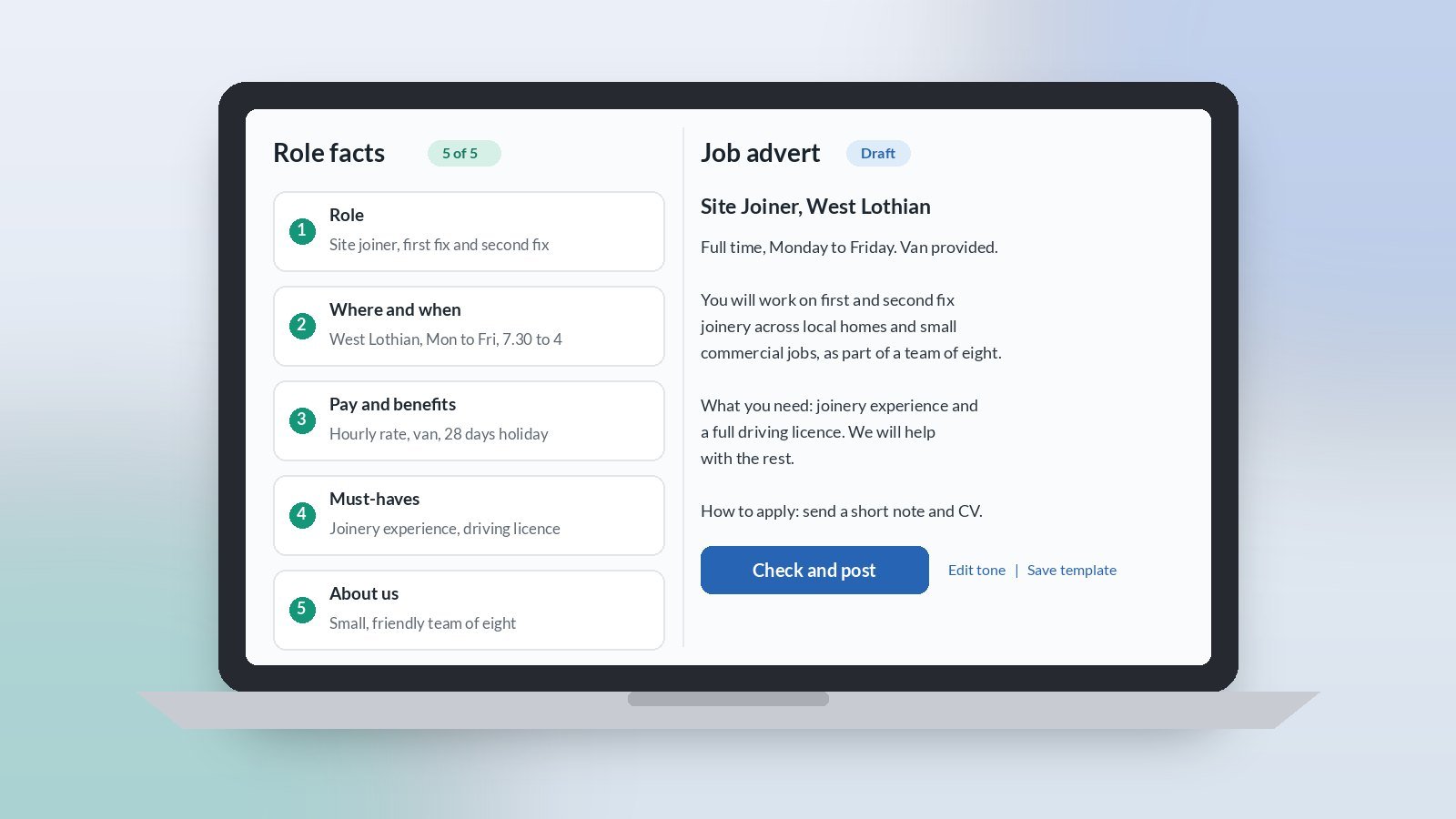
AI for job adverts is a quick, practical win for owner-led UK SMEs. Writing a vacancy usually gets squeezed into a late evening, so it ends up vague, too long or copied from the last one. A light AI assist can turn five plain facts about the role into a clear, honest first draft in your own tone. You check it, fix anything that is not right, and post it the same day.
For small firms in Scotland and across the UK, a clear advert matters more than a clever one. The right people need to see quickly what the job is, where it is and what it pays.
Why use AI to write a job advert?
Because the hard part is the blank page, not the facts. You already know what the job involves. What takes the time is turning that into something short, readable and fair. A first draft removes that friction, and you stay in charge of every word that goes out.
What does AI need to write a job advert?
Keep it to five facts:
- The role. Job title, and what a normal week actually looks like.
- Where and when. Location, hours, and whether there is any home or hybrid working.
- Pay and benefits. The real salary or rate and the main benefits. Adverts with clear pay are easier to act on.
- Must-haves. Only the skills, tickets or licences the job genuinely needs. Keep the list short.
- About you. Two or three honest lines about the business and the team.
Then ask for a short advert in plain English with a clear way to apply. If talking is quicker than typing, our guide to speech-to-text for busy SME owners shows how to dictate the facts on the way back from a job.
How do you keep the advert sounding like your business?
Give the tool one example of your own writing, such as a past advert you liked or a page from your website, and ask it to match the tone. Then cut anything that sounds like a big corporate. Phrases like “fast-paced environment” and “rockstar” say nothing about your job. A plain description of a real week says a lot.
What should you check before the advert goes live?
- Pay, hours and location. These must match what you will actually offer. Never let the draft round them up.
- Fair wording. Read it for anything that could put people off unfairly, such as references to age, being “young and energetic” or a “native” speaker. If you are unsure about a requirement, take advice from your HR adviser or ACAS guidance.
- The must-haves list. Remove anything that is a nice-to-have. A long list puts off good people who could learn the rest.
- How to apply. One clear route and a closing date if you have one.
- Personal data. Do not paste in details about current staff or past candidates. Check your tool’s data settings before you start.
Can AI help with the rest of hiring?
Yes, for the wording jobs around it. It can draft a short reply to applicants, a set of interview questions based on the must-haves, and a polite “not this time” email. Our guide to AI for email replies uses the same short-notes method.
Keep the decisions with people. Do not let a tool shortlist or reject candidates for you. You know what a good fit looks like for your team.
How should you trial it?
Next time you hire, time yourself. Write the five facts, let the tool draft the advert, check it against the list above and post it. Save the final version as your template, so the next advert starts from your own best work rather than a blank page.
Signs it is working: the advert goes out within a day of deciding to hire, it reads like you, and applicants ask fewer basic questions. Signs it is not: you rewrite most of it. The fix is usually a better example of your tone, not a different tool.
Want help picking the right first jobs for AI?
Accendo Intelligence runs a half-day AI Efficiency Workshop for owner-led firms, from £625 for a small group (typically 3 to 5 people). We map where your week goes, pick the first admin jobs worth a light AI assist, and leave you with a short, ordered plan. Scotland first, UK-wide remote. No tool roundup and no strategy theatre.
This week, if a vacancy is on your mind, write the five facts down. That is most of the advert done.
Leave a Reply