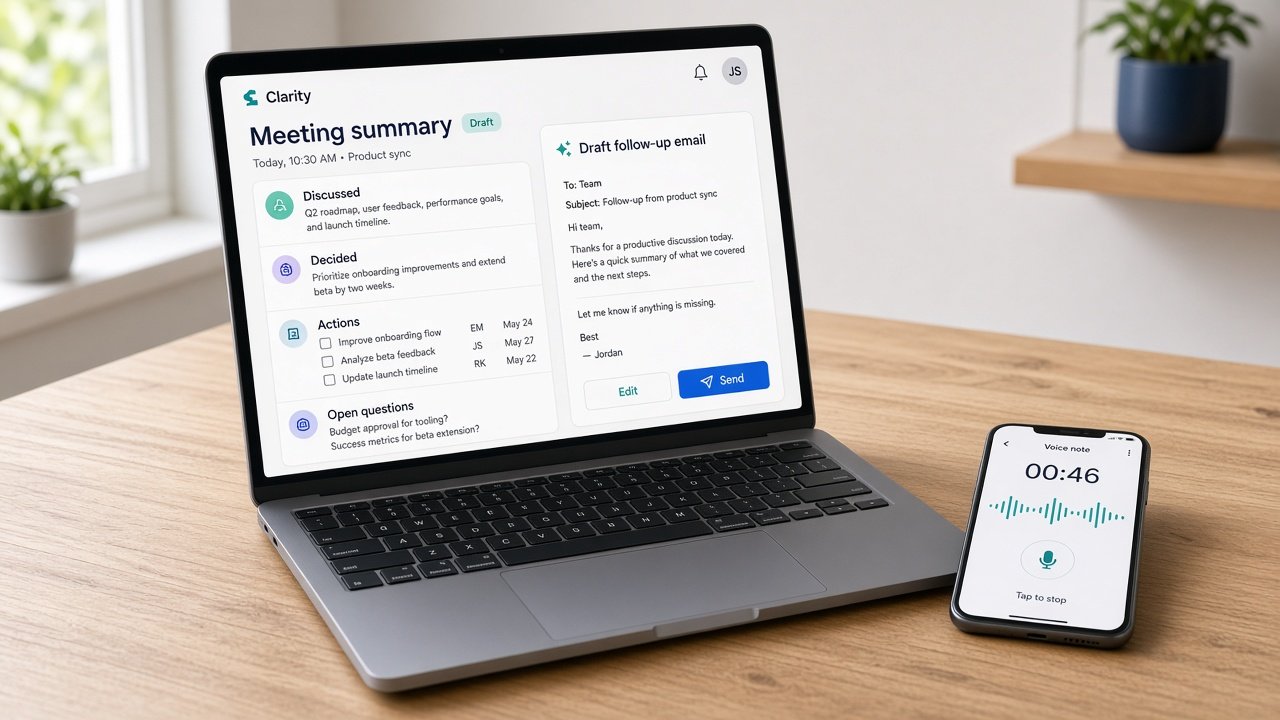
AI meeting notes are one of the simplest wins in practical AI for UK SMEs. The call is not the slow part. The slow part is what comes after: writing up who agreed what, sending the follow-up, and remembering the actions a week later. A light AI assist can turn a short voice note or a transcript into a clean summary and a draft follow-up email in minutes, while you stay in charge of what gets sent.
For owner-led firms in Scotland and across the UK, that after-call admin is easy to put off. Then the follow-up goes out late, or not at all, and the next call starts with “where did we get to?”
Why start with meeting notes and follow-ups?
Because the job repeats every week, the facts are fresh, and the output is easy to check. You were on the call. You will spot a wrong action or a made-up date straight away.
It also fixes a real gap. Most small teams do not lack meetings. They lack a reliable written record of what was decided and who is doing what next.
What does a good AI meeting summary look like?
Keep it short and the same shape every time. Four headings are enough:
- What we discussed (three or four lines, no more)
- What we decided
- Actions, each with an owner and a date
- Open questions to answer before next time
If a summary runs longer than a screen on your phone, ask for a shorter one. Nobody reads a wall of minutes from a 30 minute call.
How do you get the notes in the first place?
There are two easy routes, and neither needs new software across the whole business:
- Talk it out after the call. Spend two minutes speaking your notes into your phone or a speech-to-text tool while you remember them. Then ask for the four-heading summary. We wrote about speech-to-text for busy SME owners if typing is the bottleneck.
- Use the transcript you already have. Many video call tools can produce a transcript. Only record or transcribe with everyone’s agreement, and tell people at the start.
The voice note route is often better for small firms. It is quicker, it captures what mattered to you, and it avoids recording conversations that should not be recorded.
How do you turn the summary into a follow-up email?
Ask for a short email to the other person based on the summary: thanks for the time, what was agreed, their actions, your actions, and the next step. Then edit it in your own voice and send it the same day.
That same-day follow-up is where most of the value sits. It shows the customer or supplier you were listening, and it puts the actions in writing while everyone still agrees on them.
What should you check before anything goes out?
- Actions and dates. AI tools sometimes fill gaps. If an action or deadline was not agreed, take it out.
- Names and numbers. Prices, quantities and spellings need a human check every time.
- Sensitive conversations. Staff matters, disputes and anything confidential stay out of the tool. Write those notes yourself.
- Your data rules. Check your tool’s settings and what you are comfortable sharing before you start.
Treat the draft like notes from a helpful new starter. Quick and useful, and always read before it leaves the building.
How long should you trial it?
Four weeks, one person, one type of meeting. Customer calls or weekly supplier check-ins work well. Before you start, note how often follow-ups go out late or get missed. At the end of week four, look again and decide: keep, tweak or drop.
Signs it is working: follow-ups go out the same day, actions stop slipping, and the next meeting starts from the notes instead of from memory. Signs it is not: you rewrite most summaries, or the tool adds things nobody said. The fix is usually a clearer voice note and a fixed four-heading format, not a different tool.
Want help picking the right first job?
Accendo Intelligence runs a half-day AI Efficiency Workshop for owner-led firms, from £625 for a small group (typically 3 to 5 people). We map where your week goes, pick the first admin jobs worth a light AI assist (meeting follow-ups are often one), and leave you with a short, ordered plan. Scotland first, UK-wide remote. No tool roundup and no strategy theatre.
After your next call, speak two minutes of notes, ask for four headings, and send the follow-up before the end of the day.
Leave a Reply